Setting targets is usually a tricky exercise for many sales team managers. In the current climate of uncertainty, preparing your team members’ targets for 2021 will be easier once you have answered a few key questions.
Who is concerned?
As soon as a sales force has more than two salespeople, I recommend considering team targets alongside individual ones: in a crisis, rallying people around a collective goal is often essential when solidarity and fairness are sought across the whole company.
When the organisation combines remote and on-site working, the collective dimension of the target result also matters more. It makes remote management easier and maintains the cohesion of your teams.
What target horizon?
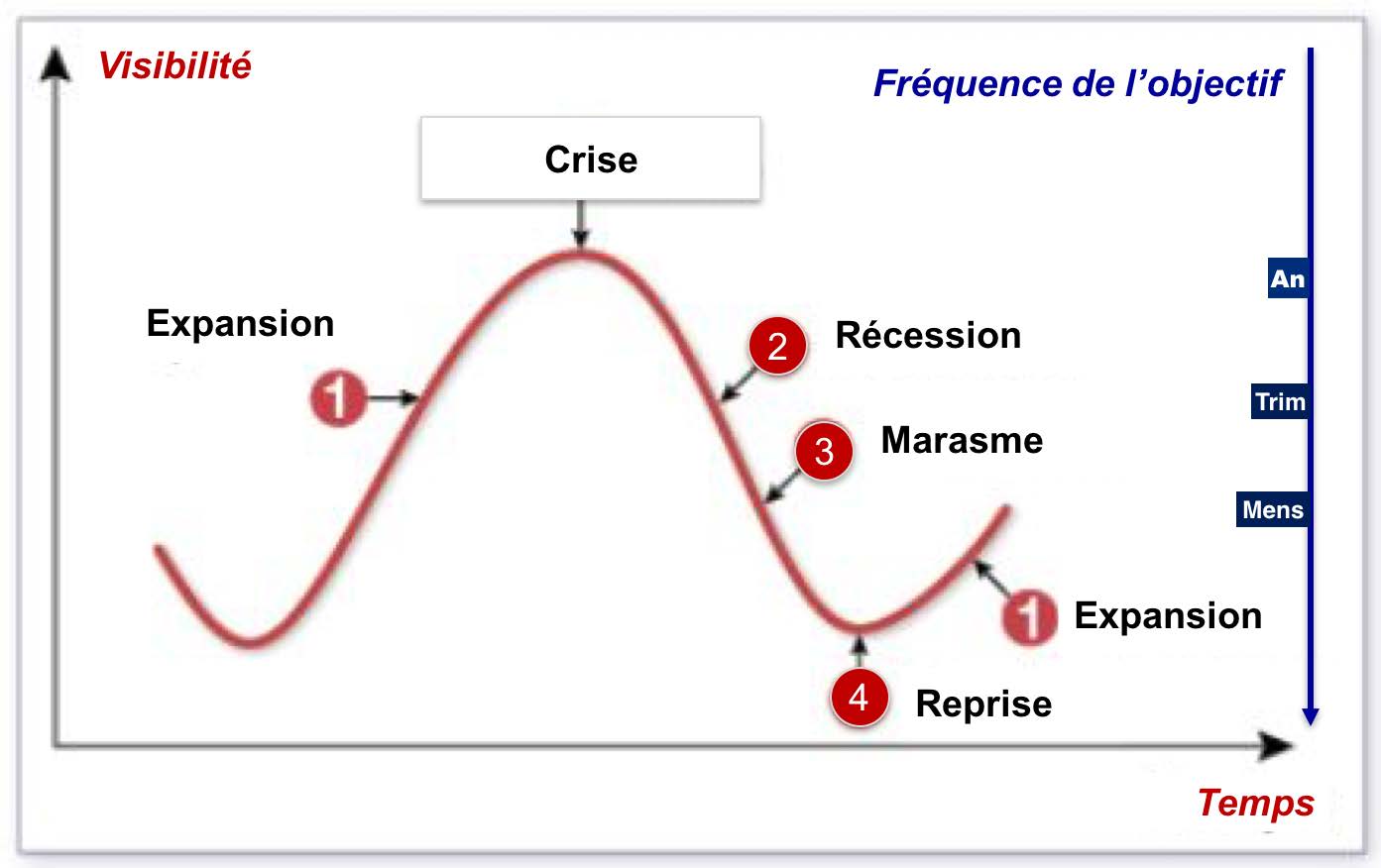
In an uncertain environment, a shorter horizon is preferable, especially for short sales cycles. It allows you to anticipate the next phase change in your economic cycle: expansion, recession, slump or depression, recovery, expansion… (Fig 1). Setting monthly and quarterly targets, updated as often as necessary, limits the risk of ending up with an annual target that is either unachievable or lacking in ambition.
More frequent targets should be accompanied by more frequent payment of bonuses and commissions.
What type of target?
When the emphasis is on performance, activity (volume or turnover) is favoured in phase 4 (recovery) and phase 1 (expansion), whereas profitability and margins are decisive in times of crisis (phases 2 and 3). Ask yourself whether the salespeople who generate the most margin really are the best paid.
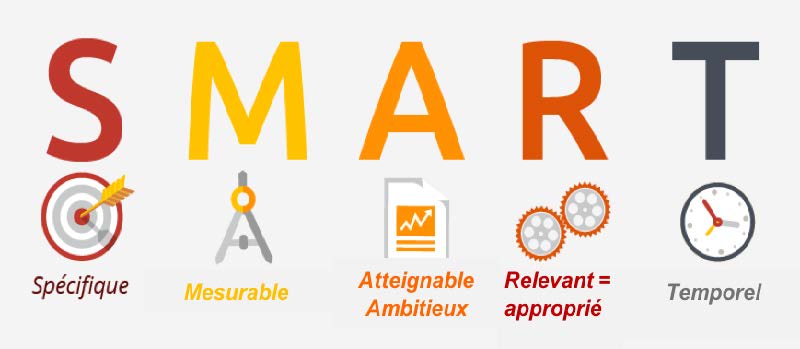
For this type of target, the SMART method works well.
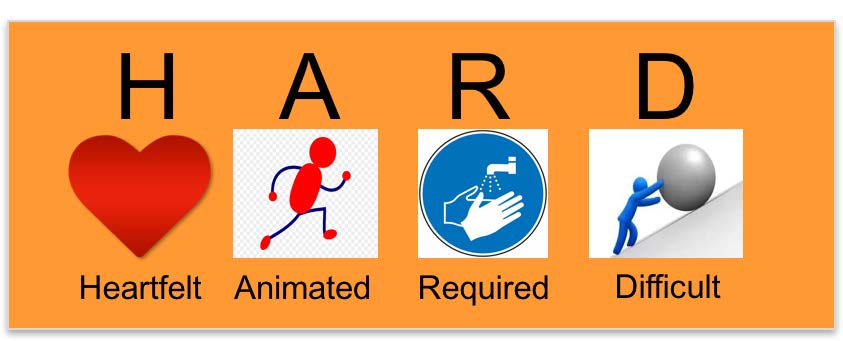
At individual level, improving a salesperson’s key skills is better approached with the HARD method.
What level of target should you aim for?
Sales targets or quotas may vary considerably from one quarter to the next in 2021: managers and salespeople will need to agree on realistic yet ambitious figures, formalised in their target amendments. Nevertheless, the risk of setting the wrong target level in the pandemic context ahead will be very real. To curb any undesirable effects, the sales staff pay plan could include a catch-up mechanism at the end of next year.
Why change the pay plan’s trigger thresholds?
The trigger threshold is the minimum target that must be reached for the bonus or commission to be paid. In a recession or slump, the lowering of trigger thresholds should be proportional to the fall in volume demand and to the fall in selling prices, in order to remain fair.
I also advise you to check that the trigger threshold level is consistent, i.e. that it generates enough margin to cover at least the fixed salary of each salesperson.
How should sales targets be adapted in a crisis?
In phases 2 and 3, sales activity shifts towards solvent customers and markets requiring little investment: it therefore makes sense to base commissions on turnover collected rather than invoiced, and also to take account of the margin rate or the customer acquisition cost.
When specifying the target, it seems to me worthwhile to ask whether you might be encouraging unnecessary discounts or rebates.
When the company’s cash flow is under strain, setting a target for reducing customer credit will help shorten production cycle times and ease the pressure on finances.
Finally, I believe it is preferable to uncap bonuses and commissions – and therefore the targets associated with outperformance in individual pay plans – even if that outperformance stems from a windfall effect.