Social distancing and management: how to adapt
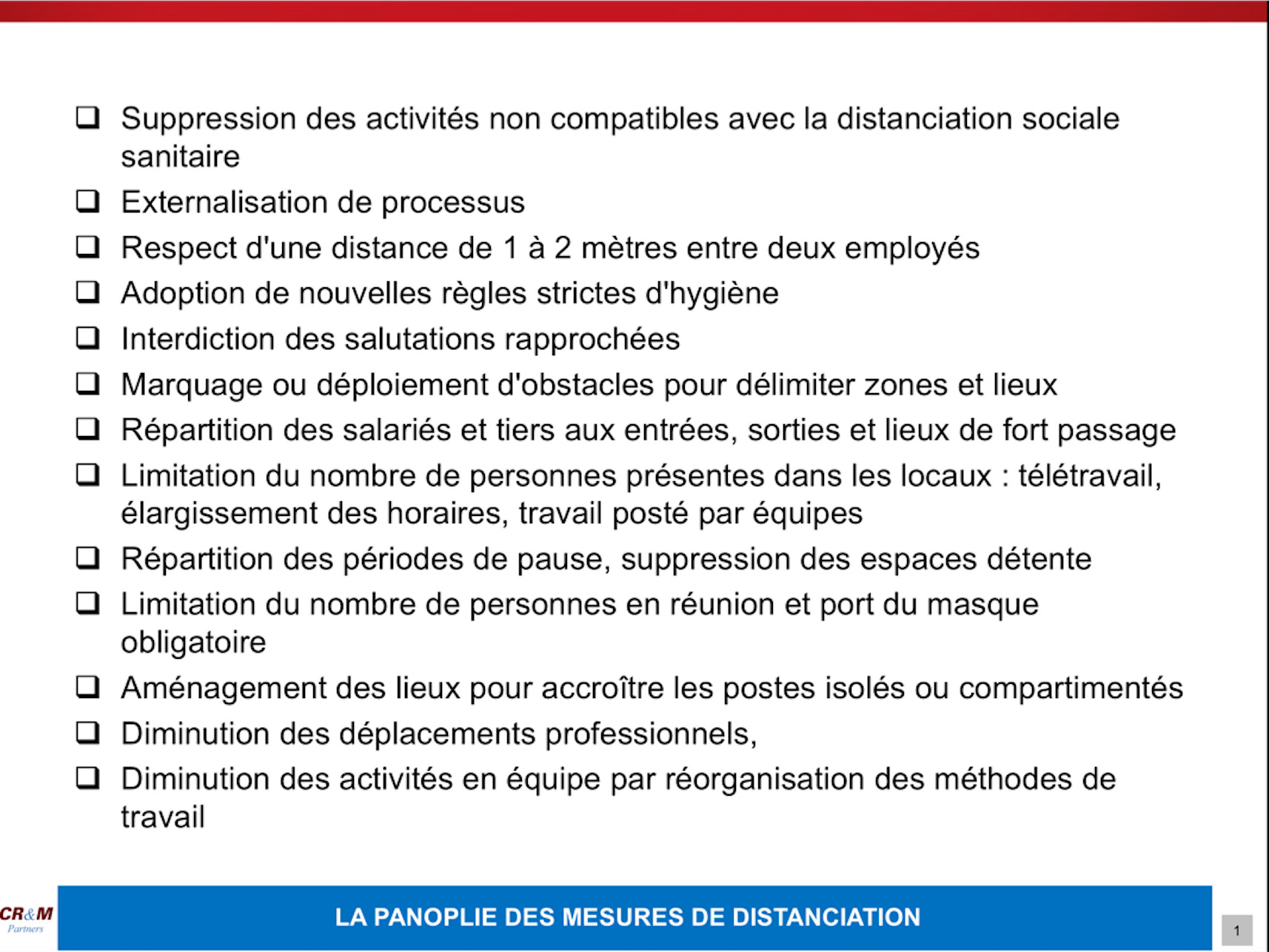
With the Covid-19 pandemic, political and medical authorities have identified social distancing as a key means of tackling the health crisis: they advise us to keep a physical distance of at least 1 metre in France, 1.5 metres in Australia or Germany, and 6 feet (1.82 m) in the United States. In this sense, social distancing amounts to the spatial distance separating individuals, but depending on the country, this new policy also includes temporary measures such as closing borders and businesses or placing the population in lockdown. In other words, it is about reducing interpersonal contact. Once the first wave of the pandemic recedes, other lasting distancing measures will inevitably be considered, though it is still far from clear what effect they will have on our way of life and on our businesses. From a management perspective, how will the notion of social distance now influence our practices? Below I offer a few lines of thought inspired by François Aélion’s approach to management (1) and by my own experience.
Distance in management
For 50 years, since the work of Geert Hofstede, professor at Maastricht University, management has treated power distance as a specific criterion of cultural difference. Countries with high power distance (Latin European or Arab countries, for example) “have an almost sacred relationship with authority, erect social barriers, distinguish between the informal and formal forms of address, and give precedence to respect, age, rank or gender in human relations. In a society with high power distance, members accept the established order and are neither inclined nor encouraged to question their place in a hierarchical pyramid that is often highly structured. In countries with low power distance (English-speaking countries), interpersonal relationships are more direct and straightforward, the established order can be challenged, and age and rank matter less in defining authority” (1). In a society that favours low power distance, the manager will be close to team members, who expect to take part in the decisions that concern them.
Distance and the manager’s power
A manager’s power depends on this notion of “distance versus closeness”. Often working in a large company, the authoritarian manager gives priority to distance. Focused on their own problems, they are not really available to help others. The authoritarian manager is uncompromising about the respect they are owed and inflexible about how their team works. They remain very distant and secretive. Nobody in the team would dream of addressing them informally, and everyone hesitates to approach them. Communication cycles are very long, and this pitfall of distance and deference undermines team members’ motivation.
The friendly manager, who favours closeness, risks running into another pitfall for team motivation: being so close to the team that they can no longer bring any organisational or institutional added value. They rarely say no to requests and keep no secrets from team members, who see them more as a colleague and therefore do not show them the same respect as they would a genuine team leader.
A charismatic manager strikes the right balance between distance, respect and closeness. By respecting themselves, they more naturally earn the respect of others, without this coming at anyone else’s expense. Transparent and actively involved in the success of their team members as well as their own, they use distance and closeness in a measured and appropriate way. Their communication cycle is adjusted to the situation. For them, leading also means making team members autonomous: achieving this requires finding the right distance, which calls for flexibility and trust.
Today, companies that are still operating, and those that will resume in the coming weeks, are changing and adopting the new set of distancing measures. These simplified manager profiles show that these measures upset the previous balance between distance and closeness and therefore call for an evolution, if not a revolution, in management.
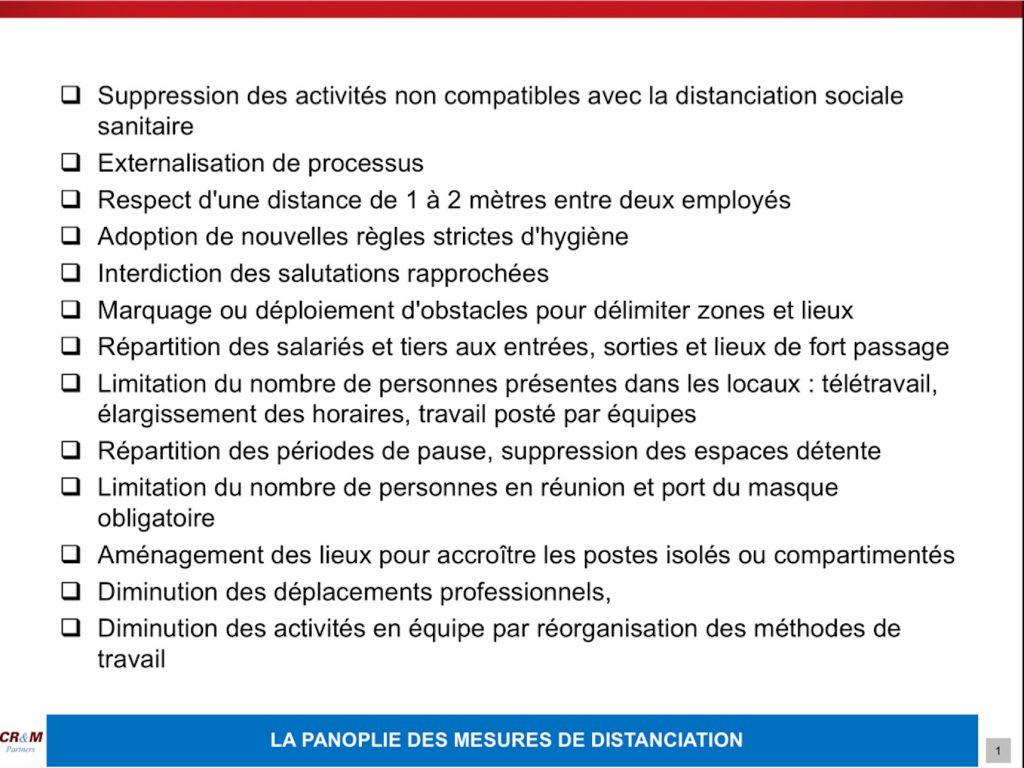
The impact of such measures in terms of change seems to me proportional to the size of the company. Increased social distancing in an era of industrial revolution adds to the pressure to reduce company size and favours the “small company”. But these measures will also disrupt team members’ needs as set out in Maslow’s hierarchy: the need for security, for belonging and for autonomy.
The need for managers to step up communication
The world has never seemed so uncertain, so managers will have to make greater efforts to meet their team members’ heightened need for security. The more numerous or extensive the distancing measures, the better employees’ health and safety will be protected. The corollary of this development is:
- An increase in socio-economic risk (loss of employment or business, loss of income and additional costs) for both the employee and the company;
- The negative effects of changes to working rules on the risk perceived by the employee;
- Experimentation with new ways of managing remotely.
“It is the lack of information that feeds rumours, allows every possible interpretation of the situation and sustains fear. Informing people is therefore the first necessity. But for information to be reassuring, it must be precise (ruling out interpretations), and the manager must deliver it clearly, transparently and quickly. Ideally, the manager should find a way to add value when passing on this information: explaining to others who is affected by these decisions, why these new instructions are being given, how they stem from the risk analysis carried out by the health and safety bodies, sharing the expected and observed reactions with their own line manager…” (1)
The other first necessity is listening, because the more people are informed, the greater their need to express themselves. For a manager, actively listening to reactions, seeking the views of those who speak up less and feeding the feedback loop within the company completes the communication cycle. Throughout the post-lockdown recovery phase, the manager would be well advised to shorten the time between communication cycles by informing everyone daily, even if nothing has changed since the day before.
Monitoring compliance with the rules
Any change naturally provokes resistance from those confronted with it, and its strength is generally proportional to the number of changes introduced into the system. In a country often criticised for its individualism, its distrust of authority and its lack of discipline, managers will have to step up monitoring to ensure that everyone complies with the new rules over time. At a cultural level, redefining the company’s values to affirm the primacy of the collective interest may, for example, help them do so. Continued training, for instance in the form of 5- to 10-minute micro-sessions delivered remotely by a manager, leadership by example throughout the management line, and the friendly enforcement technique advocated by Ido Erev, a researcher in behavioural economics (2), are other avenues worth exploring. To respond to a breach of the distancing rules, rather than imposing a sanction directly, ask each team member to systematically and amicably prompt the person concerned to observe the rules more closely in future.
How can distance be combined with the need to belong to a group?
“The second motivational need the manager must take into account is belonging to the group, which in turn strengthens the security of its members. Building a close-knit team requires a free flow of exchanges, the first condition of which is that the leader is accessible” (1).
Distancing, gravity and aloofness can hinder this accessibility. To offset the risks of disintegration associated with the full range of distancing measures, the manager would be well advised to apply the rules of welcome and accessibility with particular emphasis during the later phases of the current health crisis, until things return to normal.
When welcoming someone, recognising a performance or celebrating a success, the physical distance between manager and team member is generally shorter than in normal working situations, with more open body language than usual. What will happen tomorrow if handshakes, hugs and kisses on the cheek are banned? Spending more time in contact, speaking more slowly, emphasising intonation and strengthening the emotional content of the message can help to make up for this. Wearing masks at work will delight the Dr House in all of us, but it will deprive us of signs of empathy such as a smile or the joy or sadness expressed on someone’s face. Managers will have to compensate through action, gestures, words and eye contact.
Fewer opportunities for physical contact with team members, as a result of remote management for example, can make it harder to prevent or detect aggressive, submissive or manipulative behaviour, or free-riding, within a team. To maintain group cohesion and work effectiveness, managers will need to be doubly vigilant in this respect and must not neglect the key actions of their role: ensuring that all team members share the same goal, securing each person’s buy-in to their own objectives, regularly reviewing the progress of the team’s and individuals’ performance with them, resolving conflicts, and so on.
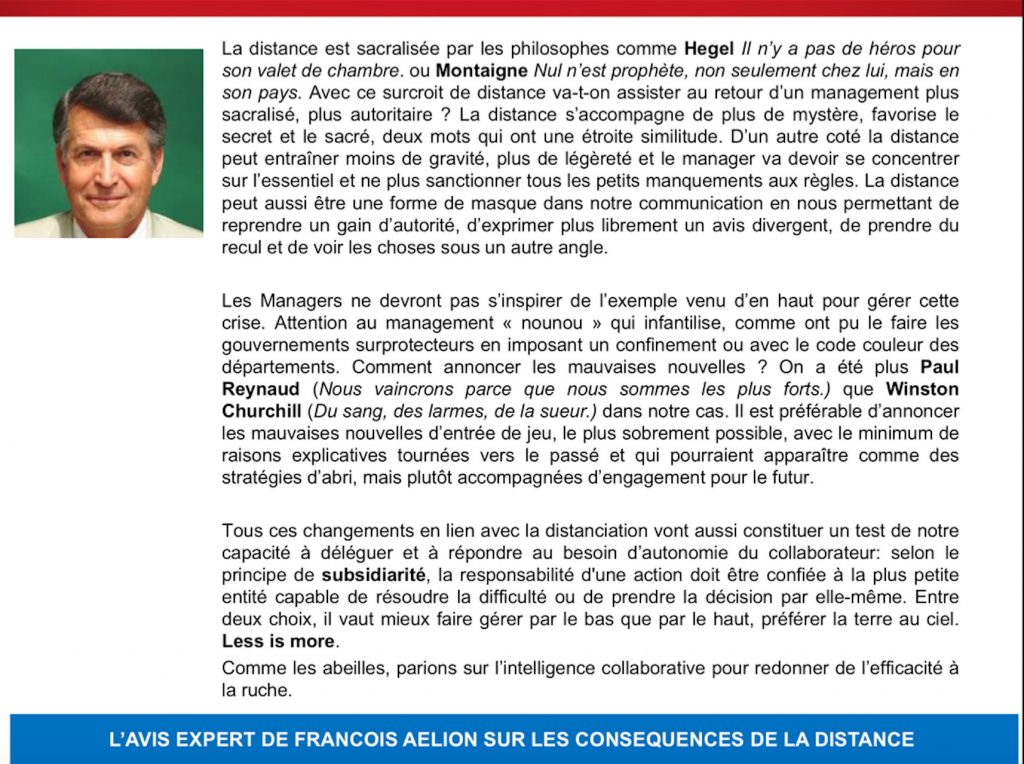
In conclusion, to deal with the consequences of the current crisis and the increased distance, managers must find new ways to motivate their team members while guaranteeing their safety. Let us sum up our suggestions for achieving this. First, take the time needed to inform them every day of the good news as well as the bad. Open up more room for dialogue by holding more one-to-one meetings and by seeking opinions and suggestions, without forgetting to act on them. To bring people together, be much more accessible than before the crisis, redefine the shared project if necessary, and spell out the new team objectives and your new operating rules. Highlight team members’ contribution to your future successes. Train them in the friendly enforcement technique to ensure that protective distancing is maintained over time.
Take advantage of the circumstances to show your trust in them, by delegating in a way that meets their need for autonomy and by judging more on the results of their work than before.
References (1) François Aélion, Manager en toutes lettres, Les Editions d’Organisation – 1996 (2) Ido Erev, article by Asaf Ronel, “Israeli Researcher Finds a Clever Way to Enforce Social Distancing”, Haaretz, 30/3/2020 https://www.haaretz.com/israel-news/.premium-coronavirus-israel-clever-wayenforce-social-distancing-1.8714725